Europe doesn’t need to catch up. For years now, financial and economic media across the ideological spectrum all over the globe are disseminating the narrative that Europe is small. Poor. Second class. The old obstinate neighbor who doesn’t know what is good for them. All in comparison to the USA, China or generally, successful large-scale economic powers of the times. By whose standards though?
Plagued by a centuries-old past marked and marred by inequality, conflict and atrocities and too many wars to number, Europe has become a punching bag, constantly criticized and expected to absorb every blow from supposedly superior and self-appointed economic experts. Europeans are late to any party, they say, molly-coddled and impoverished by social market economies and anything but a force to be reckoned with.
Critics are convinced that some invisible hand has endowed them (and no one else) with the expertise to chart the continent’s course through today’s troubled global economic waters. Europa is doomed, like a fat and lazy woman. It should be forever ashamed of itself and be glad anyone is paying any attention at all. For the time being. Everyone seems to know what is best for Europe, especially when it comes to progress and innovation or the supposed lack thereof. Follow the superstars or woe be unto you.
Now why would you, especially if you are European and living in Europe yourself, support this narrative and write complaining posts about too much AI regulation, too much bureaucracy and too much passivity on LinkedIn? You do see, on global scale, the quality of life and future prospects in Europe is still unrivalled, all things considered? And you do see that Europe remains uniquely advanced economically when judged not only by wealth, but also by morals, the common good for many and a high standard of living?
Poor-opa? Really?
It is a shame that Europe is being beaten by the figurative ugly stick and put in a position of weakness.
- Where else are compromise and consensus regarded as true strengths rather than weaknesses?
- Where else are democratic institutions expected to balance freedom with responsibility for others?
- Which other continent has social security systems in place that still function comparatively well?
- On which other continent do as many people cycle to work, try to grow and buy as much organic produce as possible, or live sustainably?
- Where else do people speak as many languages and have an interest in other cultures beyond their own?
- Where else are regard and compassion for others held in such high esteem?
- In times of climate change and resource scarcity, where else is moderation considered a virtue?
- Where else are new ideas and innovation held to high standards before they are adopted?
- Which other continent has as much potential to establish true partnership models for living together in the 21st century and beyond?
- Which other countries offer their university students access to comprehensive and state-of-the-art university degrees without sending them into spiraling debt?
- Which nation outside Europe has built such extensive protections for workers, consumers, and citizens?
- Which other continent has industries that are well positioned to pivot towards truly sustainable solutions to the climate crisis?
- And finally, with all these pillars in place, who has greater potential than Europe to become a role model for the world and a truly responsible global player?
It’s time to stop for a minute and think about how we really want the future of the global economy to look versus how it is likely going to look if we keep going the way we are presently going. It is time to be self-confident and start acting for the future, so as many people can benefit as possible and stop worshipping what is coming from elsewhere. Why do we think that corporations using algorithms, social media and technology primarily for the benefit of a few are what we want? Are you even greater if you are flying to Mars while AI is putting your staff out of work? And who exactly gave a handful of companies the power to literally force hundreds and thousands of people out of jobs unless “you are willing to engage with a new technology”?
Yes, Europe is a huge construction site in many ways but most of the solid foundations required for peaceful and prosperous living by our own standards are in place for the 21st century. Yes, Europe needs to progress in many ways – but it can and it will if everyone realizes where the true treasure is.
Over many centuries, Europe has been the cradle to hundreds, thousands, maybe millions of innovations that remain relevant to this day and gave birth to further innovation that benefitted the many and not just the innovators themselves. Few regions of the world can make a similar claim.
Building is Europe’s Second Nature
Europe understands better than most what it means to stock and to share resources, to live in close quarters efficiently and peacefully, with regard for other living beings. People debate and reach agreements via consensus. Most Europeans already know that cut-throat competition or a system of feudalism run by overlords, where the many work for the very few, for a song, to be discarded at stakeholder whim have never worked for any nation in the long term (we sent those bears to the woods centuries ago, folks).
Europe is in need of reforms, many of them, and the place to start is neither self-contempt nor contempt by others or feeling insecure. There are a lot of problems to solve and the need for even closer cooperation and consensus. We need a common European capital market (hello bulls), a stronger innovation ecosystem geared at fighting climate change, less bureaucracy where it serves no purpose but feeding a bloated bureaucracy, and confidence in Europe’s strengths. Europe has rebuilt too many times to count and it is time to rebuild for sustainable use of resources, for nature and for the planet this time while using new technologies in effective and positive ways.
Europe needs to put a stop to collective criticism and self-flagellation and recall its strengths instead. It needs to look past bubbles, hypes and crazes instead of longing to be a big player where everyone fends for themselves. Let’s stop trying to imitate others, always feeling ten steps behind. In the manufacturing sector, Europe needs a master plan to re-align its ancient industries towards tomorrow’s environmental technologies, to re-invent financial wellbeing, to re-invent education and become a positive role model of partnerships instead of domination.
Stop Imitating And Start Innovating
True innovation has nothing to do with imitation, it means actually going places where no one has ventured before. It entails looking far into the future and work with resources in responsible ways to secure life for generations ahead. It calls for trying what has not been tried before in the scope of valuable partnerships. It involves condemning lethargy, curtailing nepotism and stopping whatever only works for the few or over the next legislative period.
Remember beauty, remember harmony, remember fresh air and nature. Our biggest task should be preserving nature, further developing cultural achievements and work models, everything geared towards improving the quality of life for as many people as possible. We should think about how we want to garden, cool, heat and eat going forward.
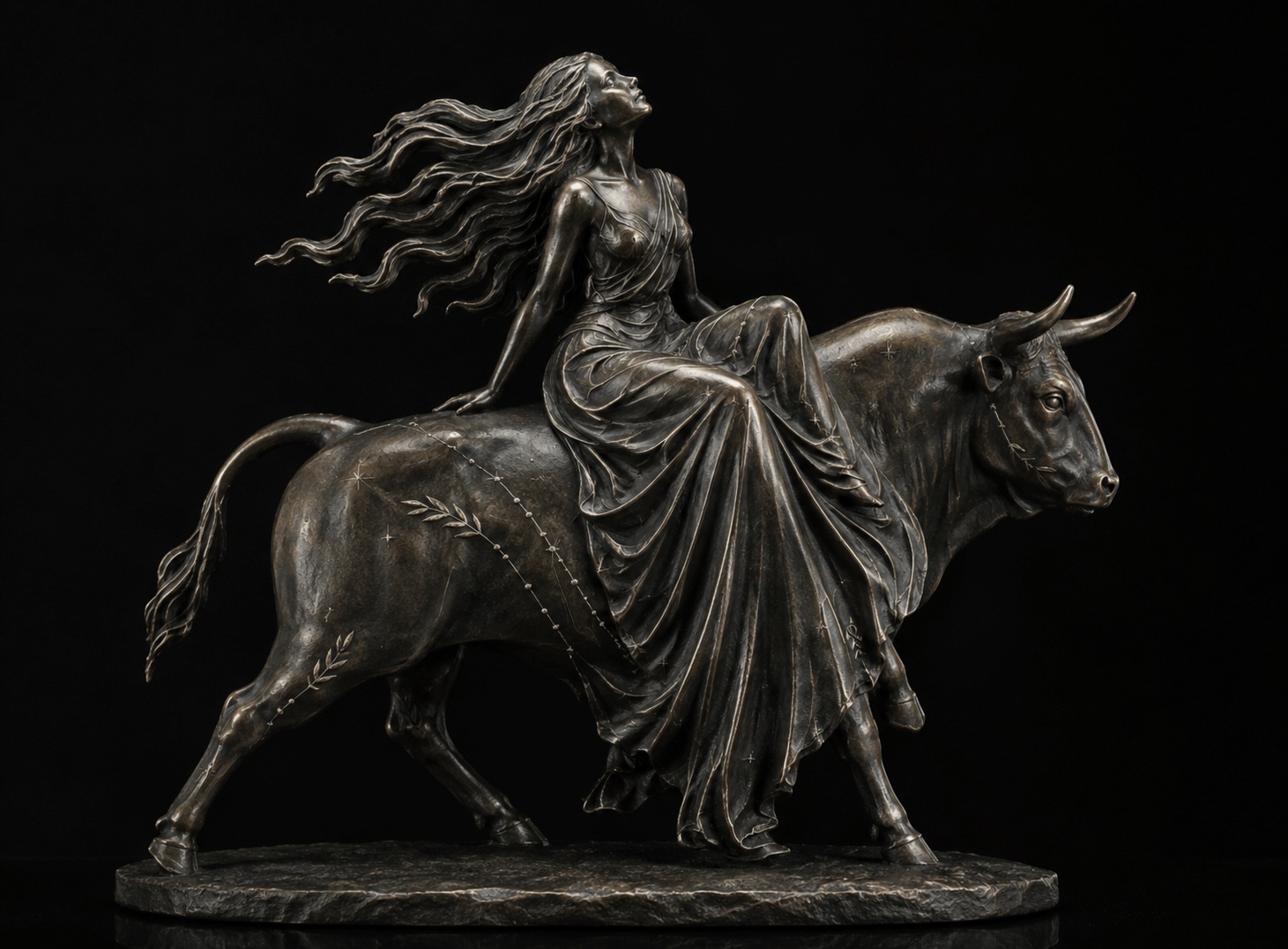
The first step for Europe could be to stop chasing models that everyone is talking about right now and that are trending because they are already yesterday’s trends. The bull is an ancient symbol of strength and plenty. But it was not the bull that gave Europe its name.
📸 Europa riding the bull. AI-generated with OpenAI’s ChatGPT image generation. Concept by the author.